When you look for a hospital in China, you will see words like "public", "private" and "Class 3A". These words are normal for Chinese people, but new for most visitors. This guide explains them in simple words. It also shows you how to check a hospital yourself.
Swipe the table sideways to see all columns.
| Topic | What the official source says | Issued by | Date |
|---|---|---|---|
| Hospitals in China | China had 38,710 hospitals at the end of 2024 | National Health Commission | 2025-12-01 |
| The top grade | Only 1,876 of them have the top grade, "Class 3A" | National Health Commission | 2025-12-01 |
| How long a grade lasts | A hospital grade lasts four years, and a hospital can lose it | Ministry of Health | 2011-09-21 |
| Private hospitals | Private hospitals can get the same grades as public hospitals | National Health Commission and nine other national bodies | 2019-06-10 |
| Hospital rankings | The Fudan ranking is a public-interest project run by an independent academic institute; latest edition 2023 | Hospital Management Institute, Fudan University | 2023 edition |
Public and private hospitals
China counts every hospital as either public or private.
- Public hospitals (公立医院) belong to the state or to local collectives.
- Private hospitals (民营医院) are all the others. Hospitals with foreign owners also count as private.
At the end of 2024, China had 11,754 public hospitals and 26,956 private hospitals.
Public hospitals charge prices from official lists set by the provincial government. Special-needs and international services can cost more. Our guide to Chinese Hospital Service Levels explains how this works.
Non-profit and for-profit
Every hospital is also either non-profit or for-profit.
- A non-profit hospital must spend any extra money on itself, for example on new equipment or new services.
- A for-profit hospital can pay its profits to its owners.
The government does not run for-profit hospitals. Hospitals built by Chinese and foreign partners together are usually for-profit.
Types of hospitals
You will see these hospital types in China:
- General hospitals treat many kinds of illness.
- Traditional Chinese Medicine (TCM) hospitals use traditional methods, such as herbal medicine and acupuncture. China had 5,263 TCM hospitals at the end of 2024.
- Integrated hospitals use both Chinese and Western medicine.
- Ethnic-medicine hospitals use the traditional medicine of China's minority peoples.
- Specialty hospitals focus on one area, such as children, eyes or cancer.
- Rehabilitation hospitals help patients recover after illness or surgery.
Some hospitals belong to the army or the armed police. They have their own management, separate from the normal health authorities.
Hospitals with foreign owners
Since 1 November 2024, foreign companies may open hospitals that they fully own in nine places. These places are Beijing, Tianjin, Shanghai, Nanjing, Suzhou, Fuzhou, Guangzhou, Shenzhen and all of Hainan Island.
These hospitals must be large (Class 3), and at least half of their managers and medical staff must be from mainland China. By August 2026, four of these hospitals were open, in Tianjin, Shanghai, Boao (Hainan) and Fuzhou. More pilot cities are being chosen.
What "Class 3A" means
Every Chinese hospital can have two labels: a level and a grade.
The level shows the hospital's size and job. There are three levels: Class 1, Class 2 and Class 3. Class 3 is the highest level. Class 3 hospitals treat emergencies, very serious illness and difficult, complex cases. They also train doctors and support smaller hospitals.
The grade shows the result of the hospital's official review. A hospital gets Grade A or Grade B, or it fails. Grade A is the better result.
So "Class 3A" means the highest level and the best grade. In Chinese, "Class 3A" is 三级甲等. You say it sān jí jiǎ děng.
| Hospital level (end of 2024) | Number of hospitals |
|---|---|
| Class 3 | 4,111 |
| — of which Class 3A | 1,876 |
| Class 2 | 12,294 |
| Class 1 | 13,287 |
| Not graded | 9,018 |
| All hospitals | 38,710 |
How a hospital gets its grade
- Every hospital in China must take part in the review system.
- The health commission of each province leads the reviews and sends expert teams.
- The result is shown to the public for 7 to 15 days. This public notice is called a 公示 (gōng shì).
- A grade lasts four years. Then the hospital must be reviewed again.
- A hospital can lose its grade, for example after serious safety problems or cheating in the review.
- The newest national rulebook for Class 3 hospitals is the 2025 edition.
Private hospitals can join the same review and get the same grades. Officials must give a private hospital its review result within three months.

The yearly check of large public hospitals
Every year, the government also checks large public hospitals on four things:
- medical quality;
- how well the hospital works;
- long-term development;
- patient satisfaction.
Since 2025, this check is called "performance monitoring" (绩效监测). In the round for 2023, 2,168 large public hospitals took part, not counting TCM hospitals. This yearly check is separate from the hospital's grade.
National titles
Some hospitals also hold national titles. These titles are given by the government, and each one means something different.
- National Medical Centre (国家医学中心): The National Health Commission chooses top hospitals to lead care in one medical field, such as children's health. The government tells these hospitals not to over-advertise the title.
- National Regional Medical Centre (国家区域医疗中心): Since 2019, this programme helps strong hospitals bring their care to regions with weaker services. The aim is that patients travel less for good care. In 2022, the government named 89 hospitals to lead these centres. It chose hospitals with leading medical technology and a high national reputation.
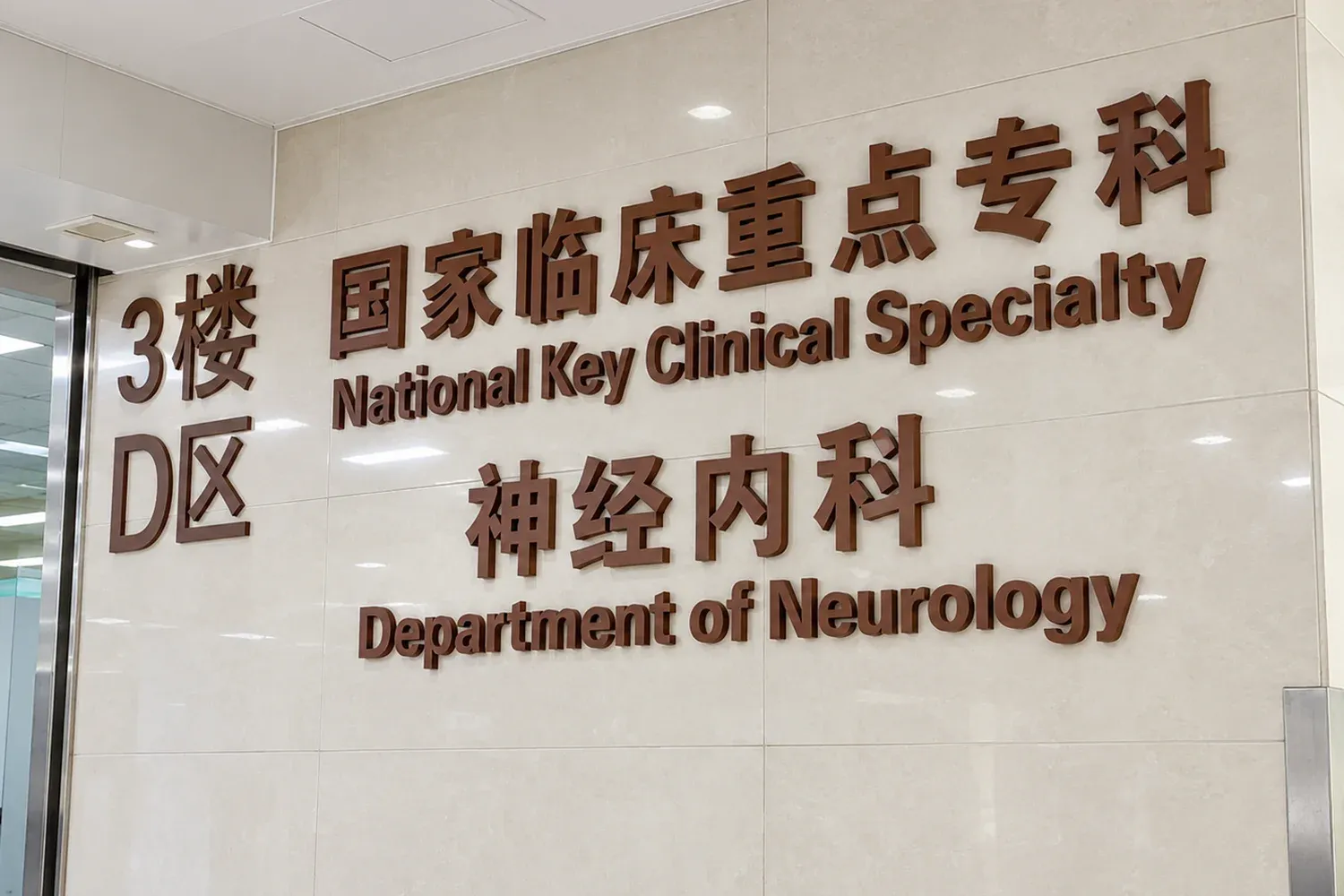
- National Clinical Key Specialty (国家临床重点专科): This title belongs to one department, not to the whole hospital. The province suggests the department, and the National Health Commission confirms it. From 2021 to 2025, the government funded 1,270 of these projects. If a hospital mentions this title, ask which department has it.
- National Key Discipline (国家重点学科): This is an old university title from the Ministry of Education. It stopped in 2014, so it is not a current hospital award.
How hospital rankings work
Some hospitals in China say they are “top-ranked”. This usually means a ranking made outside the government. One you will often see is the Fudan ranking (复旦版中国医院排行榜). It is made by the Hospital Management Institute of Fudan University in Shanghai. The institute describes it as a public-interest project run by an independent academic institute. It is not a government grade or title. The first ranking came out in 2010.
- How it is made: each year, senior specialists from China’s national medical associations vote for the best hospitals in their own field. For the overall list, the votes are combined with research results, such as published papers and awards.
- Two kinds of list: there is a list for each specialty, such as cancer, and an overall list. Since the 2023 edition, the overall list has no number one. It puts hospitals into five tiers, from A++++ down to A. Hospitals in the same tier are not ranked against each other.
- Ranked and nominated: in each specialty list, the top 10 hospitals get a rank from 1 to 10. Other hospitals are listed as “nominated” (获提名医院), without a rank.
Swipe the table sideways to see all columns.
| Label | Class 3A | National Clinical Key Specialty | Fudan ranking |
|---|---|---|---|
| Who gives it | Government health authorities | National Health Commission | Hospital Management Institute, Fudan University (an academic institute) |
| What it covers | The whole hospital | One department | The whole hospital (overall list, in tiers) or one specialty (ranked 1–10) |
| What it tells you | The hospital is large and met national standards | The government chose and funded this department as strong in its field | Specialists across China rate this hospital highly |
How we use it: we do not copy the ranking’s lists. When a hospital states its own ranking on its official WeChat account, we quote the hospital and link to its post. Our hospital lists start from government titles, such as the National Regional Medical Centre programme above.
International accreditation
China also has a newer hospital standard called CIHA (China's International Hospital Accreditation Standards). A non-profit centre in Shenzhen, Guangdong province, runs it, and hospitals apply for it. In October 2026, its official list had 19 hospitals, mostly in south China and Hong Kong. So most top hospitals in China do not have it, and that is normal.
Some hospitals in China mention foreign accreditations. China grades its hospitals through its own national review system, and that is the system Alifa Health uses.
How to check a hospital yourself
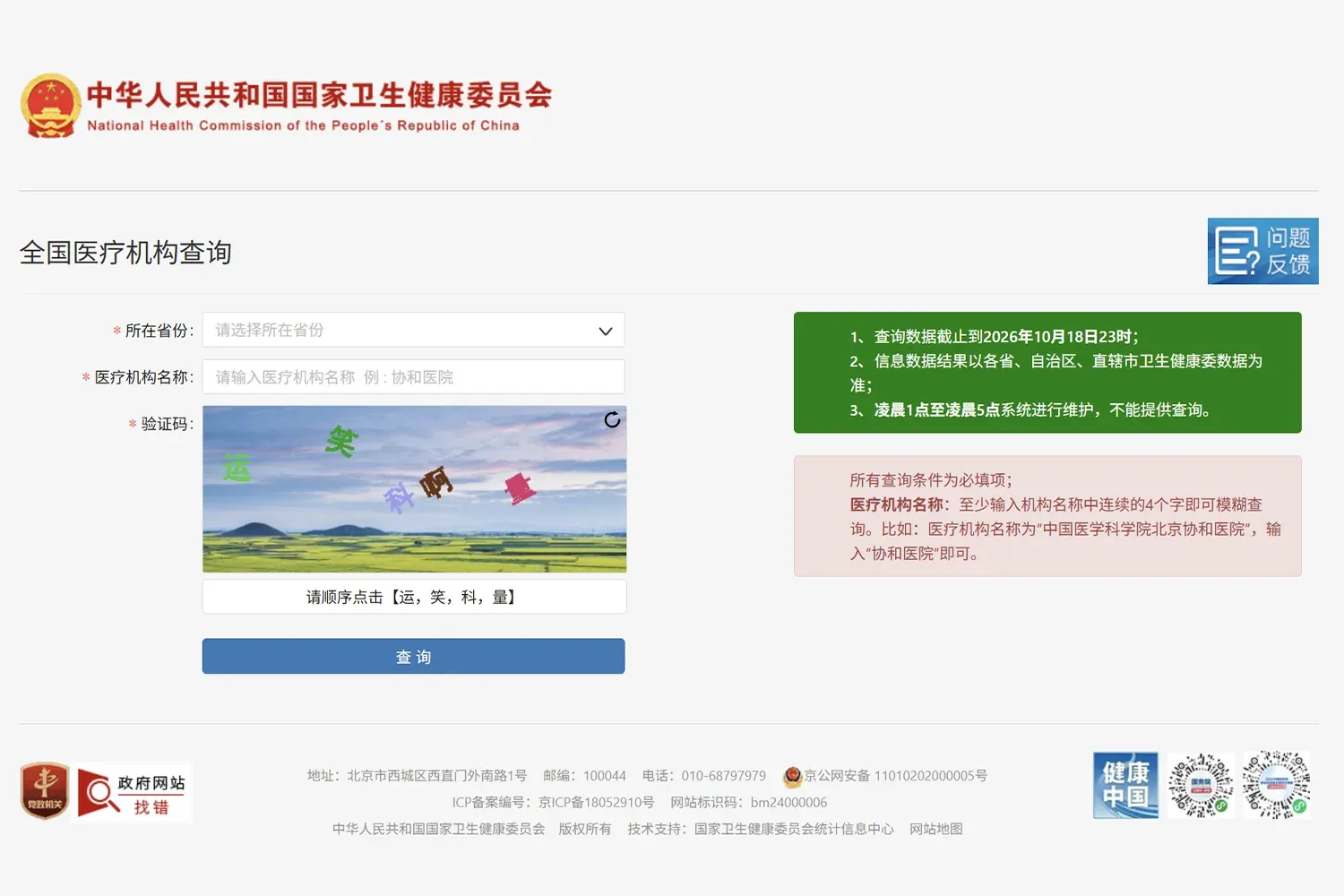
- Check that the hospital has a licence. Use the National Health Commission's hospital search (zgcx.nhc.gov.cn). The site is in Chinese, so a translation app helps.
- Check the grade. Look for the hospital in the latest review notice (公示) from the province's health commission. Our hospital tables use these notices.
- Check national titles. Look for the government notice, not only the hospital's own advertising.
- Ask about the department. A National Clinical Key Specialty belongs to one department, so ask which one.
To see which hospitals list services for patients from abroad, use our table of international patient services at Chinese hospitals.
Chinese words you will see
Swipe the table sideways to see all columns.
| Chinese | Say it | Meaning |
|---|---|---|
| 公立医院 | gōng lì yī yuàn | public hospital |
| 民营医院 | mín yíng yī yuàn | private hospital |
| 三级甲等 | sān jí jiǎ děng | Class 3A (highest level, best grade) |
| 公示 | gōng shì | public notice of a review result |
| 国家医学中心 | guó jiā yī xué zhōng xīn | National Medical Centre |
| 国家临床重点专科 | guó jiā lín chuáng zhòng diǎn zhuān kē | National Clinical Key Specialty |
To learn how standard, special-needs and international services differ, read our guide to service levels at Chinese public hospitals. For deposits, cards and receipts, see our guide to paying at Chinese hospitals. To learn why patients from abroad come to China for care, read our guide to choosing China for medical care.
Common questions
What does "Class 3A" mean?
It means the hospital is at the highest level (Class 3) and got the best review grade (A). At the end of 2024, 1,876 hospitals in China had this grade.
Can a private hospital have the same grade as a public hospital?
Yes. Private hospitals can join the same national review and get the same grades.
How long does a hospital grade last?
A grade lasts four years. Then the hospital must be reviewed again, and it can lose its grade.
Can foreign companies own hospitals in China?
Yes, in nine places, since 1 November 2024. By August 2026, four of these hospitals were open.
Does a National Clinical Key Specialty cover the whole hospital?
No. It belongs to one department. Ask the hospital which department has it.
Is there an official ranking of Chinese hospitals?
No. The government does not publish a numbered ranking. It grades hospitals, and Class 3A is the highest grade. It also gives national titles, such as National Medical Centre. Independent rankings, such as the Fudan ranking, are made by academic institutes.
What does it mean when a hospital says it is “top-ranked”?
It usually means an independent ranking, such as the Fudan ranking. Ask three questions: which ranking, which year, and does it cover the whole hospital or one department? On our pages, we quote the hospital’s own statement and link to it.
How can I check that a hospital has a licence?
Use the National Health Commission's hospital search at zgcx.nhc.gov.cn. The site is in Chinese, so a translation app helps.